
Get the latest AI, data, and technology insights from Matatika’s experts direct to your inbox.
-

ETL Commodity – Why Are You Still Paying a Premium?
ETL is no longer a specialised function, it’s a commodity, yet many organisations are still paying inflated prices due to outdated, volume-based pricing models. This blog explores why ETL costs remain high, and how Matatika’s Mirror Mode offers a risk-free path to modern, performance-based pricing.
Read the article -

Data Engineers Don’t Burn Out from Work They Burn Out from Pointless Work
This blog discusses key insights from a Data Matas podcast episode featuring Nik Walker, Head of Data Engineering at Co-op. It explores how data teams can reduce burnout, cut cloud costs, and build trust in their data without overhauling their entire stack. Key themes include eliminating low-value work, right-sizing syncs, prioritising discovery, and fostering psychological safety through structured leadership. The focus is on making smarter choices, not faster ones, to create scalable, resilient data delivery systems that serve both business needs and team wellbeing.
Read the article -

How to Cut ETL Costs Without Disruption: Proven Strategies from Data Leaders
This blog summarises a LinkedIn Live session addressing how data teams can reduce ETL costs without compromising productivity or rushing into platform migrations. Drawing on insights from experienced industry leaders, it outlines strategies for improving cost visibility, minimising engineering friction, and approaching migration decisions with a structured, value-led plan rather than reactive urgency.
Read the article -
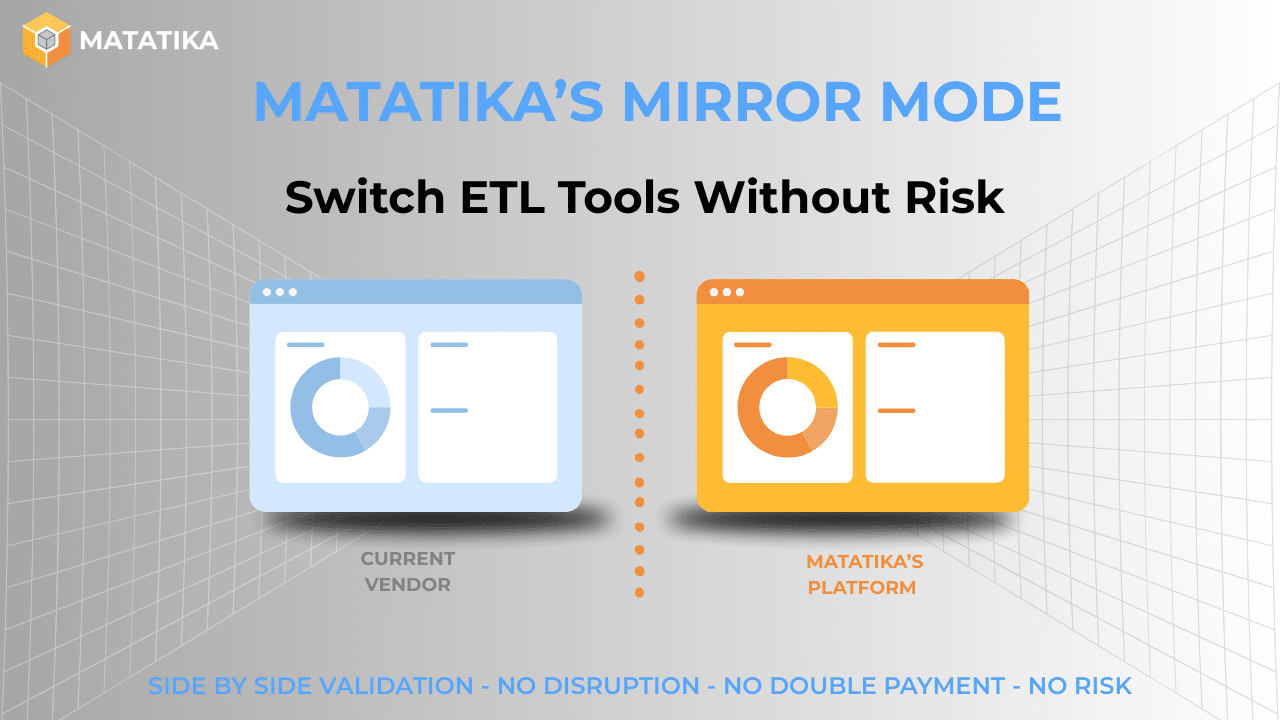
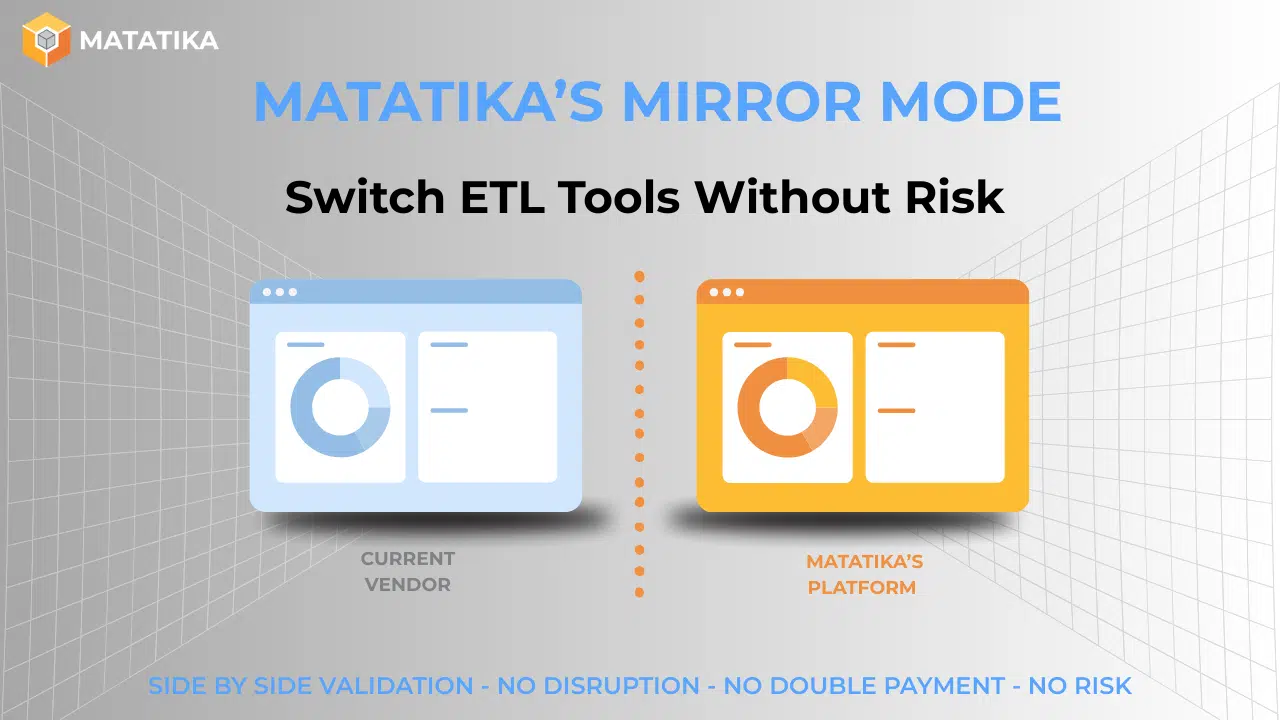
Trapped by Your ETL Tool? How Mirror Mode Helps You Switch ETL Tools Without Risk
The blog highlights how legacy ETL tools lock teams into costly, inefficient row-based pricing and risky migrations. Matatika offers a solution with Mirror Mode, allowing companies to run both ETL systems in parallel—risk-free and free until go-live. This eliminates disruption, double payments, and uncertainty. With transparent, performance-based pricing, Matatika typically cuts ETL costs by 40–60% while improving speed and support, giving data and finance teams a safer, smarter path to switch.
Read the article -

Data Analytics Strategy: How Quantum Thinking Enables Change Without Disruption
This article explores how quantum thinking can inform a modern data analytics strategy, enabling teams to innovate safely without disrupting existing operations. Based on insights from David Draper, Data Science Manager at Iris Software Group, it offers practical guidance on modular system design, embedding innovation in delivery cycles, and improving AI explainability. Ideal for data leaders seeking resilient, forward-looking analytics strategies.
Read the article



Data Leaders Digest
Stay up to date with the latest news and insights for data leaders.